15 Easy Crochet Patterns Every Beginner Can Actually Finish
Learning to crochet can feel like trying to read a foreign language at first. All those abbreviations, stitch counts, and diagrams can make even a simple dishcloth pattern look intimidating. But here’s the good news: you don’t need fancy techniques or years of practice to make something beautiful with a hook and some yarn.
The truth is, most crochet patterns are built on just a handful of basic stitches. Once you learn the chain stitch, single crochet, and double crochet, you’ve unlocked the ability to make dozens of practical, pretty projects. The trick is starting with patterns designed for your current skill level, rather than jumping straight into a complicated sweater or an intricate lace shawl.
This guide walks through why beginner-friendly patterns matter, what supplies you’ll need to get started, and a roundup of projects that won’t leave you frustrated and tangled in yarn. Whether you’re picking up a hook for the first time or dusting off skills you half-remember from a craft class years ago, you’ll find something here worth making.
Why starting with simple patterns matters
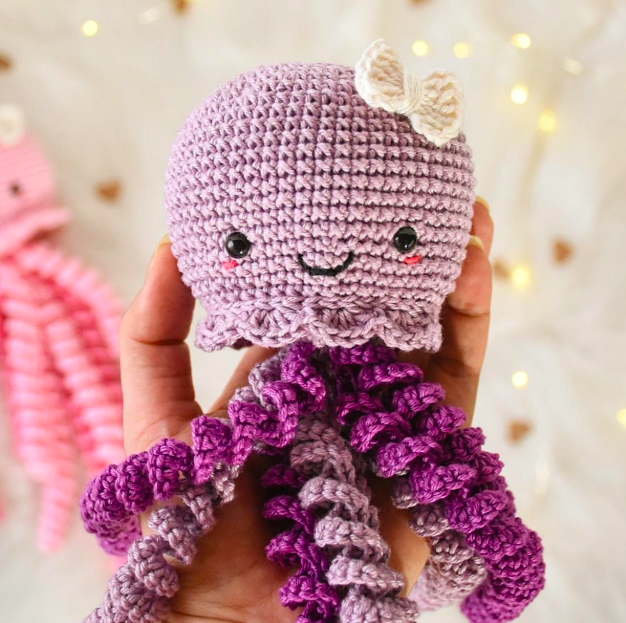
New crocheters often make the mistake of choosing a project based on how it looks rather than how it’s made. That adorable amigurumi octopus on Pinterest might be calling your name, but if it requires increasing, decreasing, and working in continuous rounds, you’re setting yourself up for frustration before you’ve even learned to hold the yarn properly.
Simple patterns teach muscle memory. Your hands need to learn the rhythm of tension, hook placement, and stitch formation before your brain can focus on following more complex instructions. Think of it like learning to drive: you start in an empty parking lot, not on the highway during rush hour.
Starting small also means you’ll actually finish projects, which matters more than people realize. Nothing kills enthusiasm for a new hobby faster than a half-finished blanket shoved in a closet because the pattern turned out to be way over your head. Quick, achievable projects build confidence and give you a reason to keep practicing.
What you need before you start
Before diving into patterns, gather a few basics. You don’t need to invest heavily upfront.
A crochet hook: Size H/8 (5mm) is a popular beginner choice because it works well with medium-weight yarn and is easy to grip. Ergonomic handles can help reduce hand fatigue if you’ll be practicing for long stretches.
Medium-weight yarn: Look for yarn labeled “worsted weight” or “category 4.” It’s thick enough to see your stitches clearly but not so bulky that it’s hard to manage. Light colors make it easier to spot individual stitches when you’re learning.
Scissors and a yarn needle: You’ll need these for weaving in ends and finishing projects.
Stitch markers: These small clips or rings help you keep track of where rounds begin, which is especially useful once you move beyond simple rows.
With these tools in hand, you’re ready to pick a project.
Easy crochet patterns for absolute beginners
Single crochet dishcloth
This is often the very first project beginners attempt, and for good reason. A dishcloth uses only the chain stitch and single crochet, worked back and forth in straight rows. There’s no shaping, no color changes, and no complicated stitch combinations to track.
Cotton yarn works best here since it’s absorbent and holds up to repeated washing. A standard dishcloth is usually around 8 inches square, which means you’ll repeat the same simple pattern enough times to really cement the stitch in your memory.
Chunky scarf
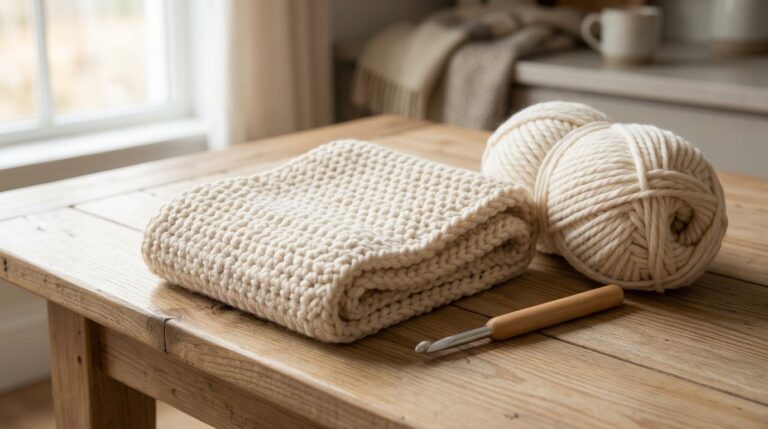
Scarves are forgiving. Length and width don’t need to be exact, and most scarf patterns use simple, repetitive stitch patterns that are easy to memorize after just a few rows. A chunky yarn paired with a larger hook (size J/10 or K/10.5) means your scarf grows quickly, which is satisfying when you’re still building patience for handwork.
The half double crochet stitch is a great choice for a first scarf. It’s taller than single crochet, so your project works up faster, but it’s still simple enough not to trip up new crocheters.
Granny square coasters
Granny squares are a cornerstone of crochet, and learning to make one opens the door to blankets, bags, and garments later on. Coasters are the perfect low-stakes way to practice this technique because each one only takes a few rounds to complete.
The granny square technique involves working in rounds and creating clusters of double crochet stitches separated by chain spaces. Once you’ve mastered a single square, you’ll understand the foundation for countless other projects.
Basic beanie hat
A simple beanie is a great next step once you’ve got single and double crochet down. Most beginner hat patterns work in continuous rounds, starting with a small circle at the crown and increasing stitches until you reach the desired head circumference, then working even rounds until the hat is long enough.
Hats are a good test of your ability to follow stitch counts, since getting the increases right determines whether your hat lies flat or puckers oddly. But a simple hat pattern without added embellishments keeps this manageable.
Dishrag washcloth with a basic border
Once you’ve made a plain single crochet dishcloth, try adding a simple border using single crochet around the edges. This introduces the idea of working into the sides of your fabric, a skill you’ll need later for more structured projects like bags and garments.
Simple baby blanket
Baby blankets are smaller than adult-sized throws, making them a manageable first blanket project. A basic pattern using half double crochet or double crochet, worked in straight rows, produces a soft, textured fabric without requiring any shaping.
Soft, machine-washable yarn is ideal for baby items. Acrylic and cotton blends are popular choices because they’re gentle on sensitive skin and easy to care for.
Headband or ear warmer
A crochet headband is a quick project that introduces basic shaping through simple increases and decreases, plus the technique of seaming two ends together. Most patterns are worked flat in a rectangle, then joined at the ends to form a loop, which is good practice for finishing techniques you’ll use in larger projects.
Market tote bag
A simple tote uses the same double crochet technique as a scarf or blanket but introduces the idea of working a flat base and then switching to rounds for the sides. Cotton yarn gives the bag structure and durability, making it functional as well as a good learning project.
Potholder
Similar to a dishcloth but typically worked with two strands of cotton yarn held together for extra thickness, a potholder is a fast, functional project. The doubled yarn also helps beginners see their stitches more clearly, since the fabric is bulkier and more defined.
Infinity scarf
An infinity scarf is worked the same way as a regular scarf, but the ends are seamed together to form a loop before wearing. This is a gentle introduction to simple seaming, a skill that comes up in nearly every garment pattern down the road.
Tips for choosing your first project
Not every “beginner” pattern is created equal. Here’s how to tell if a pattern is genuinely approachable:
Check the stitch count. Patterns that use only chain stitch, single crochet, and double crochet are easier to follow than those requiring specialty stitches like the puff stitch or popcorn stitch.
Look at the shape. Flat, rectangular projects (scarves, dishcloths, blankets) are easier than anything requiring shaping, like hats or garments with sleeves.
Read the abbreviations list. A good beginner pattern will spell out exactly what each abbreviation means. If a pattern throws abbreviations at you without explanation, it may assume more prior knowledge than you currently have.
Watch for video tutorials. Patterns that link to a video walkthrough are especially helpful, since watching someone perform a stitch is often clearer than reading written instructions.
Common mistakes beginners make (and how to avoid them)
Tension issues are the most common hurdle for new crocheters. Holding the yarn too tightly makes it difficult to insert your hook into stitches, while holding it too loosely creates uneven, sloppy fabric. This improves naturally with practice, so don’t worry if your first few rows look inconsistent.
Miscounting stitches is another frequent issue, especially in the first and last stitches of a row. It helps to count your stitches after every row until it becomes second nature.
Finally, many beginners skip swatching, assuming it’s only necessary for garments that need to fit a specific size. Even for a simple dishcloth, working a small swatch first helps you get a feel for your chosen yarn and hook before committing to a full project.
Your next steps as a new crocheter
Crochet rewards patience more than talent. The stitches themselves are simple; what takes time is building the muscle memory and confidence to work them smoothly and consistently. Start with one of the projects above, choose a pattern that spells out each step clearly, and don’t be afraid to rip out rows and start over if something looks off. That’s part of the process for every crocheter, not a sign you’re doing it wrong.
Once you’ve worked through a few of these beginner patterns, you’ll likely notice your stitches becoming more even and your pace picking up. That’s the moment to start exploring slightly more advanced techniques, like color changes, basic shaping, or your first garment. For now, pick up that hook and start with something simple. You’ll have a finished project in your hands before you know it.
Frequently asked questions
How long does it take to learn basic crochet stitches?
Most people can learn the chain stitch and single crochet within a single practice session, though building smooth, even tension typically takes a few weeks of regular practice.
What’s the easiest crochet project for a complete beginner?
A single crochet dishcloth is usually the easiest starting point since it only requires two stitches worked in straight rows with no shaping involved.
Do I need expensive yarn to start crocheting?
No. Affordable acrylic or cotton worsted-weight yarn works perfectly well for learning and is often easier to handle than specialty fibers like wool or silk.
Can I learn crochet from patterns alone, or do I need video tutorials?
Many beginners find a combination works best. Written patterns are useful for following exact stitch counts, while videos help clarify hand movements and stitch formation that can be hard to picture from text alone.