Maple Leaf Crochet Coaster Pattern | Easy Fall Crochet
Maple Leaf Crochet Coaster Pattern: Easy Fall Crochet Tutorial
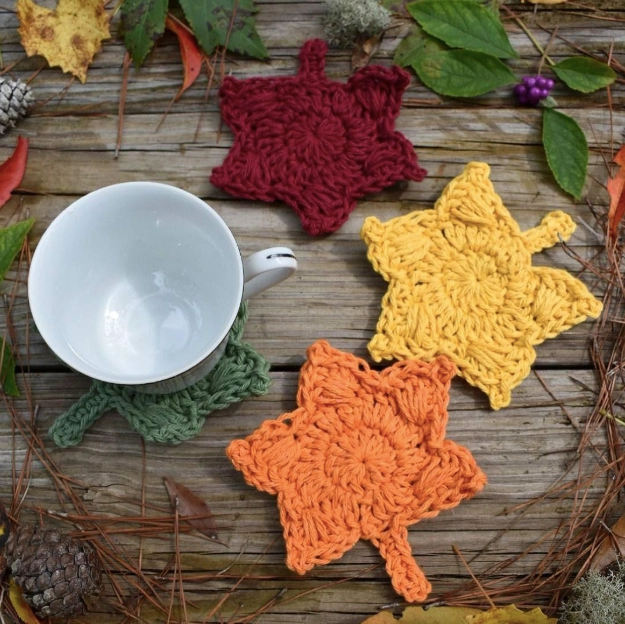
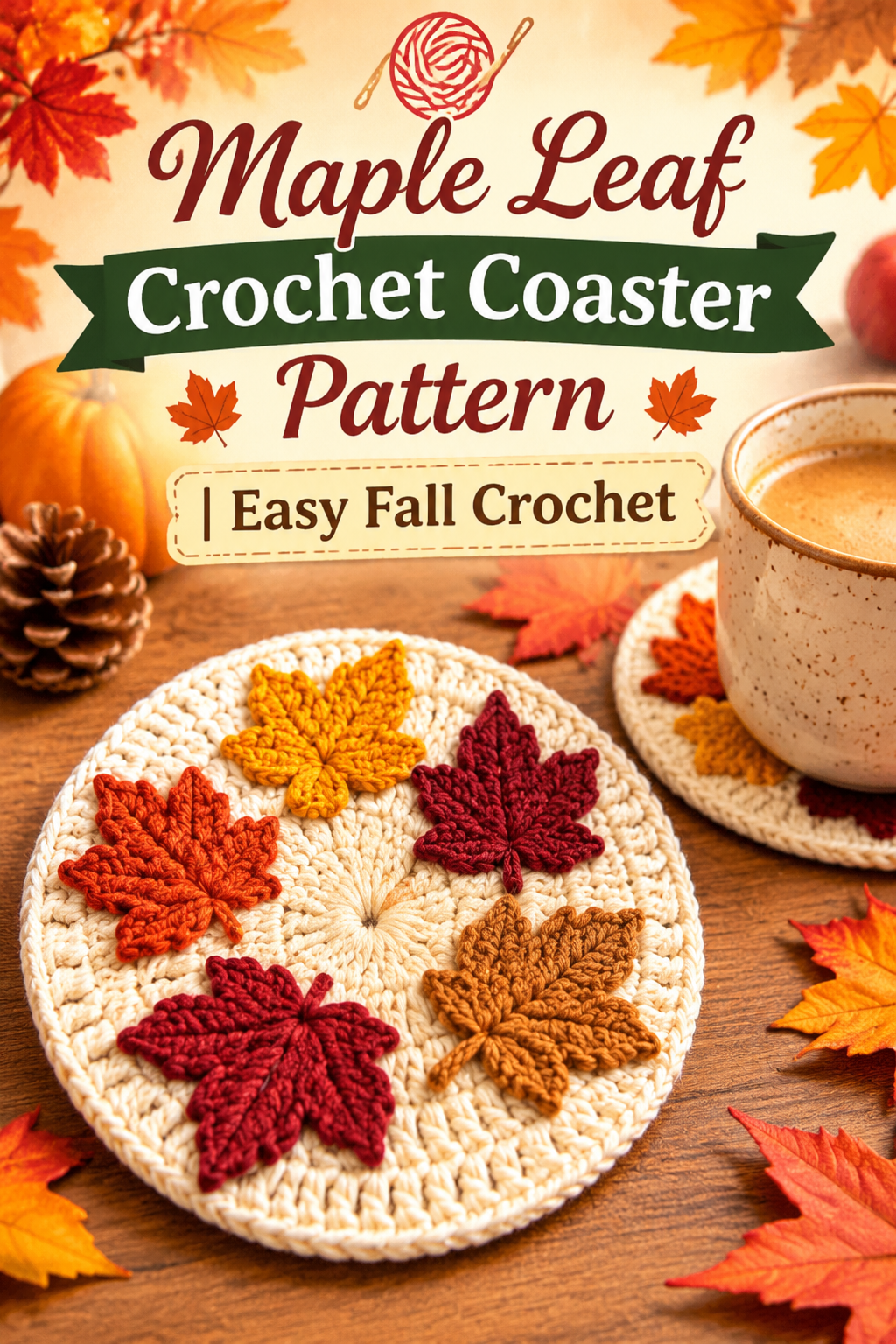
Create a beautiful handmade maple leaf crochet coaster with this original, beginner-friendly pattern. The design combines a textured cotton crochet circle with small autumn-coloured leaf appliqués, making it a lovely addition to your fall table décor.
Autumn is one of the most inspiring seasons for crochet. The changing colours of the leaves, cooler evenings, warm drinks, and cosy home decorations make it the perfect time to start a seasonal crochet project.
If you enjoy making practical decorations, this maple leaf crochet coaster pattern is a lovely project to add to your autumn collection. It combines a simple crochet circle with decorative leaf details to create a coaster that looks beautiful under a coffee mug, tea cup, or glass.
The finished design uses a soft cream base decorated with small leaves in shades of pumpkin orange, mustard yellow, caramel, and rust. These colours give the coaster a warm seasonal appearance without making the design too complicated.
This tutorial includes a complete original written pattern, materials, US crochet abbreviations, round-by-round instructions, leaf appliqué instructions, assembly guidance, and helpful tips for achieving a neat finish.
Whether you are looking for a free crochet maple leaf pattern, an easy fall crochet coaster, or a handmade Thanksgiving decoration, this project is a great way to use your favourite autumn yarn colours.
Why You’ll Love This Maple Leaf Crochet Coaster
A crochet coaster is a small project, but it can make a noticeable difference to your home décor. Instead of using ordinary store-bought coasters, you can create something personalised with your favourite yarn colours.
Here are some reasons to try this pattern:
- Beginner-friendly construction: The coaster base uses basic double crochet stitches.
- Seasonal design: Warm autumn colours create a beautiful fall-inspired appearance.
- Practical project: Use it under everyday mugs and cups.
- Scrap-yarn friendly: The decorative leaves require only small amounts of yarn.
- Great handmade gift: Make a matching set for friends and family.
- Customisable: Experiment with different leaf colours and border details.
The pattern is also a good opportunity to practise crocheting in the round, making increases, changing colours, and sewing small crochet appliqués onto a finished project.
Crochet Maple Leaf Coaster Pattern Details
Skill level
Beginner
Project time
1–2 hours
Terminology
US crochet terms
Construction
Crochet circle + appliqués
Hook size
5.0 mm (H/8)
Yarn weight
Worsted / Medium (4)
Finished size: Approximately 5–6 inches (12.5–15 cm) across, depending on your yarn and tension.
Gauge: 14 dc × 8 rounds = approximately 4 inches (10 cm) for the flat centre-circle section. Gauge is a guide rather than a strict requirement.
Materials and Tools
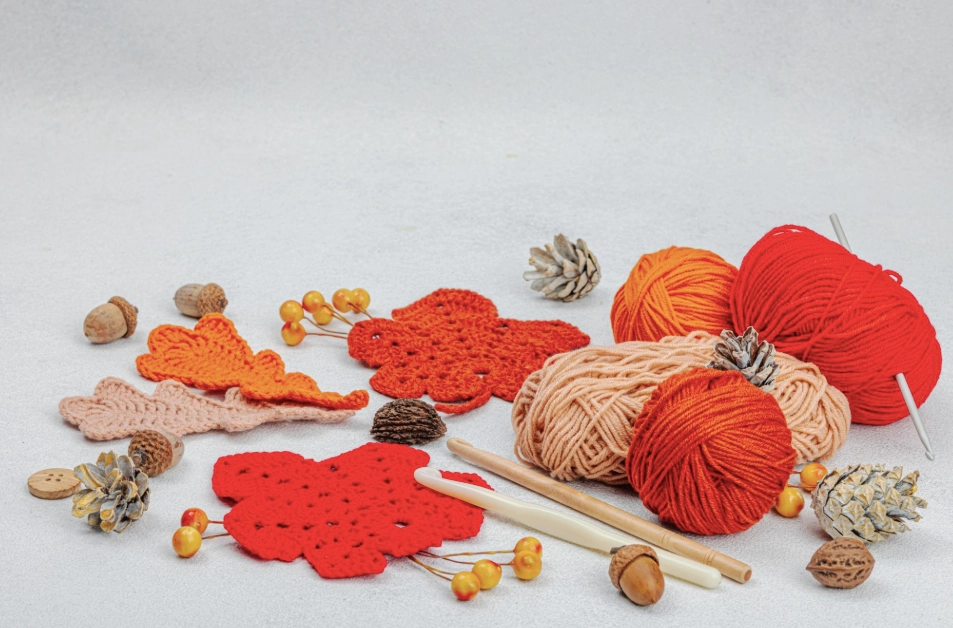
Before beginning, prepare your materials. Cotton yarn is particularly suitable for crochet coasters because it provides good stitch definition and is generally easy to care for.
Yarn Requirements
For one coaster, you will need:
| Colour | Approximate amount | Purpose |
|---|---|---|
| Cream or ivory | 15–20 g | Main coaster |
| Pumpkin orange | 2–3 g | Leaf appliqué |
| Mustard yellow | 2–3 g | Leaf appliqué |
| Rust red | 2–3 g | Leaf appliqué |
| Caramel brown | 2–3 g | Leaf appliqué and optional stem |
Amounts are estimates and will vary according to yarn thickness, tension, and the size of the finished coaster.
Recommended Yarn
Choose a smooth, medium-weight cotton yarn.
Good options include:
- 100% cotton yarn
- Cotton-acrylic blends
- Washable worsted-weight cotton yarn
Avoid very fuzzy yarn because it can make the small leaf details difficult to see.
Crochet Tools
- 5.0 mm (H/8) crochet hook
- Yarn needle
- Sharp scissors
- Stitch marker
- Measuring tape
- Blocking pins, optional
You can use a smaller hook if your stitches are naturally loose. The main goal is to create a firm but flexible coaster that lies flat.
Crochet Abbreviations (US Terms)
The following abbreviations are used throughout this pattern.
| Abbreviation | Meaning |
|---|---|
| ch | Chain |
| sl st | Slip stitch |
| sc | Single crochet |
| hdc | Half double crochet |
| dc | Double crochet |
| tr | Treble crochet |
| st | Stitch |
| sts | Stitches |
| rep | Repeat |
| inc | Increase (2 dc in one stitch) |
| FO | Fasten off |
| Rnd | Round |
Special Stitch: Double Crochet Increase
A double crochet increase means working two double crochet stitches into the same stitch.
To make one:
- Yarn over your hook.
- Insert the hook into the indicated stitch.
- Yarn over and pull up a loop.
- Yarn over and pull through two loops.
- Yarn over and pull through the remaining two loops.
- Work another double crochet into the same stitch.
You have now completed one increase.
For this pattern, the chain-2 at the beginning of each round does not count as a stitch. Work the first actual double crochet into the same stitch as the joining slip stitch.
Step-by-Step Maple Leaf Crochet Coaster Pattern
The coaster is made in two main parts.
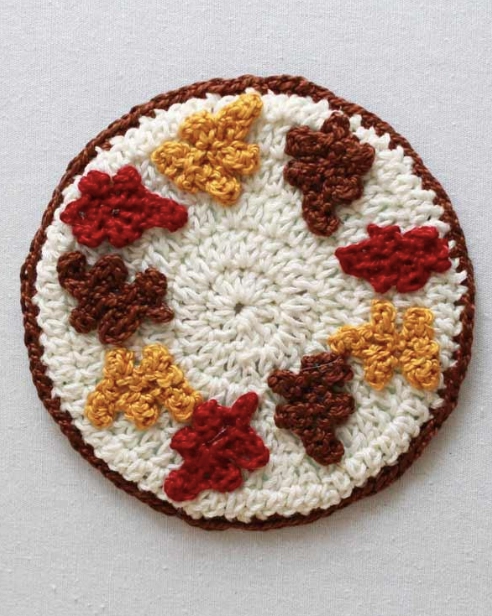
First, you will crochet a flat cream circle. Then you will make five small decorative leaves in autumn colours and sew them around the outer section.
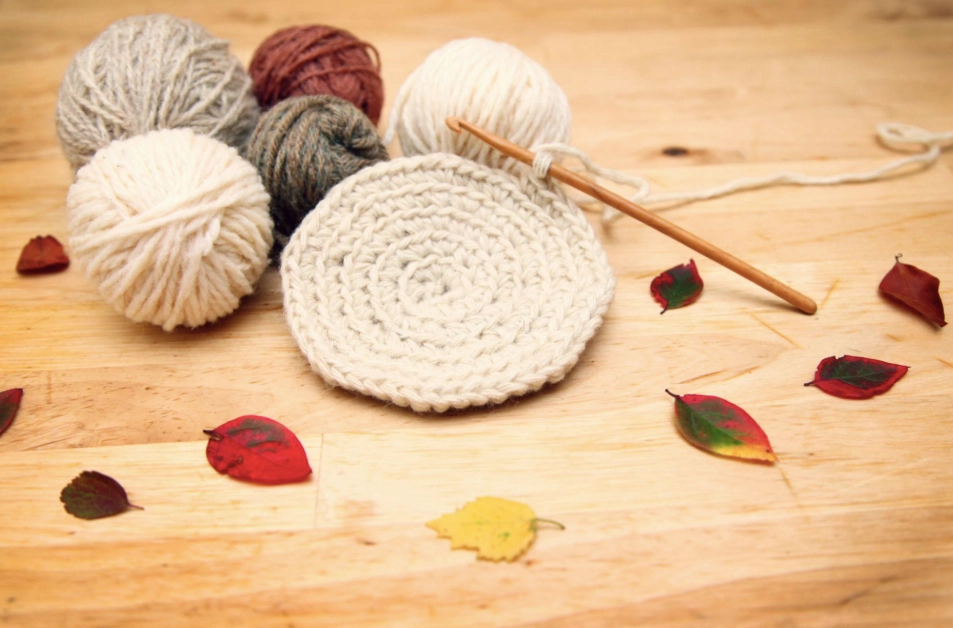
Part 1: Crochet the Round Coaster Base
Use cream or ivory cotton yarn and a 5.0 mm crochet hook.
Round 1: Create the Centre
Start with a magic ring.
- Ch 2 (does not count as a stitch).
- Work 12 dc into the magic ring.
- Pull the ring closed.
- Sl st into the first dc to join.
Stitch count: 12 dc.
Check that the centre closes neatly. If you are unfamiliar with the magic ring, you can use a chain-4 ring and work the 12 dc into the centre.
Round 2: Increase Around the Circle
- Ch 2.
- Work 2 dc into each stitch around.
- Sl st into the first dc to join.
You should have two double crochet stitches in every stitch from the previous round.
Stitch count: 24 dc.
The circle should begin expanding evenly.
Round 3: Add the Next Increase Round
- Ch 2.
- Dc in the next stitch, 2 dc in the following stitch.
- Repeat from * around.
- Sl st into the first dc to join.
Stitch count: 36 dc.
You are now creating a wider circular base.
Round 4: Continue Expanding
- Ch 2.
- Dc in each of the next 2 sts, 2 dc in the following st.
- Repeat from * around.
- Sl st to join.
Stitch count: 48 dc.
Check that the circle remains flat. If it begins curling upward, your tension may be too tight.
Round 5: Increase the Diameter
- Ch 2.
- Dc in each of the next 3 sts, 2 dc in the following st.
- Repeat from * around.
- Sl st to join.
Stitch count: 60 dc.
Your coaster should now look like a small, flat circular mat.
Round 6: Complete the Base
- Ch 2.
- Dc in each of the next 4 sts, 2 dc in the following st.
- Repeat from * around.
- Sl st to join.
Stitch count: 72 dc.
Fasten off and weave in the yarn tail securely.
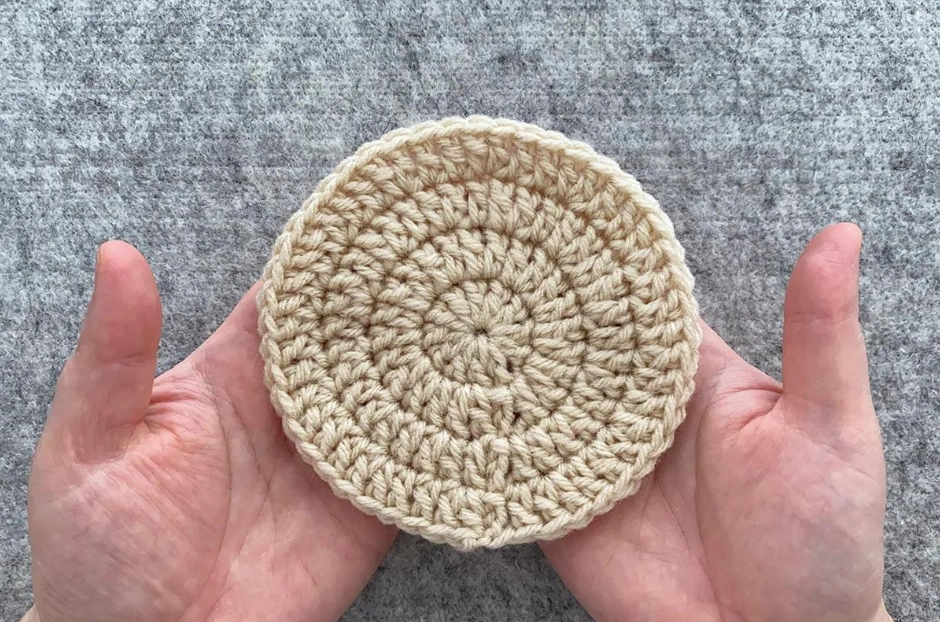
At this point, your crochet coaster base is complete. It should lie flat and have a clearly visible circular stitch pattern.
If you want a slightly larger coaster, you can add another increase round:
Optional Round 7: Ch 2, dc in each of the next 5 sts, 2 dc in the following st, repeat around, join. (84 dc)
Keep the same increase rhythm if you add further rounds.
Part 2: Crochet the Autumn Leaf Appliqués
Now it is time to make the decorative leaves.
For this design, you will make five small pointed leaves using pumpkin, rust, mustard, caramel, and burgundy yarn.
Each leaf is crocheted around a short foundation chain, creating a narrow leaf shape with a pointed tip. A small embroidered vein gives it additional detail.
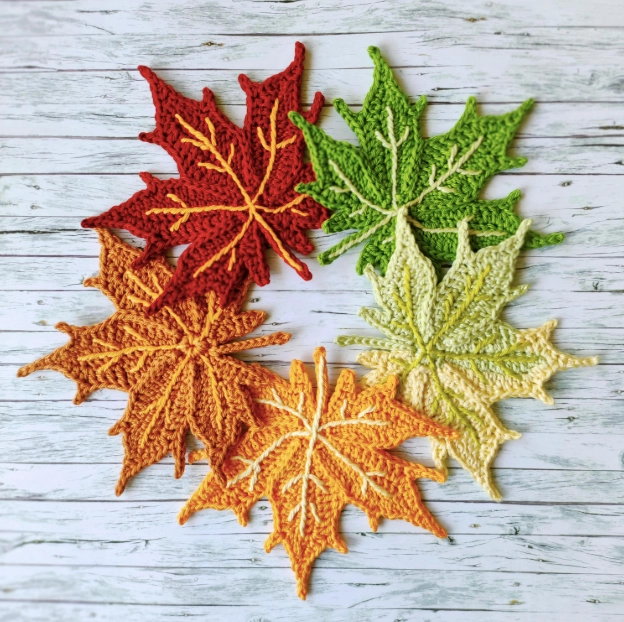
Small Crochet Leaf Pattern
Use a 3.5–4.0 mm hook for the appliqués if you want smaller, more defined leaves. You can use your 5 mm hook if you prefer a larger motif.
With your chosen autumn colour:
Foundation: Ch 8.
You will work along one side of the foundation chain and then return along the opposite side.
Leaf Round
Starting in the second chain from the hook:
- Sl st in the next ch.
- Sc in the next ch.
- Hdc in the next ch.
- Dc in each of the next 2 chs.
- In the final ch, work 3 dc.
- Turn your work so you can crochet along the opposite side of the foundation chain.
- Dc in each of the next 2 available chain spaces.
- Hdc in the next space.
- Sc in the next space.
- Sl st in the final space.
Fasten off, leaving a yarn tail for sewing.
Stitch placement: The three dc stitches at the end form the rounded tip of the leaf. The gradual change from slip stitches to taller stitches creates its tapered shape.
Repeat this pattern until you have five leaves.
Note: These are small maple-inspired leaf appliqués rather than a botanical reproduction of a full five-lobed maple leaf. Their pointed shape and autumn colours create the decorative leaf effect.
Part 3: Add Leaf Veins
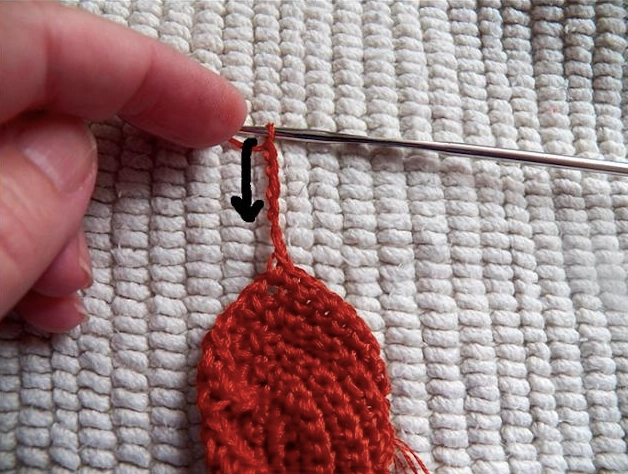
To make each leaf look more detailed, add a small centre vein.
Use a contrasting yarn shade, such as cream, gold, or a darker version of the leaf colour.
- Thread a small amount of yarn onto your tapestry needle.
- Insert the needle near the base of the leaf.
- Bring it through the centre of the leaf.
- Make one straight embroidered line towards the pointed end.
- Secure the yarn on the back.
You can also add one or two short diagonal stitches to represent smaller leaf veins.
Keep the embroidery light so that it doesn’t make the leaf stiff.
Part 4: Arrange the Leaves on the Coaster
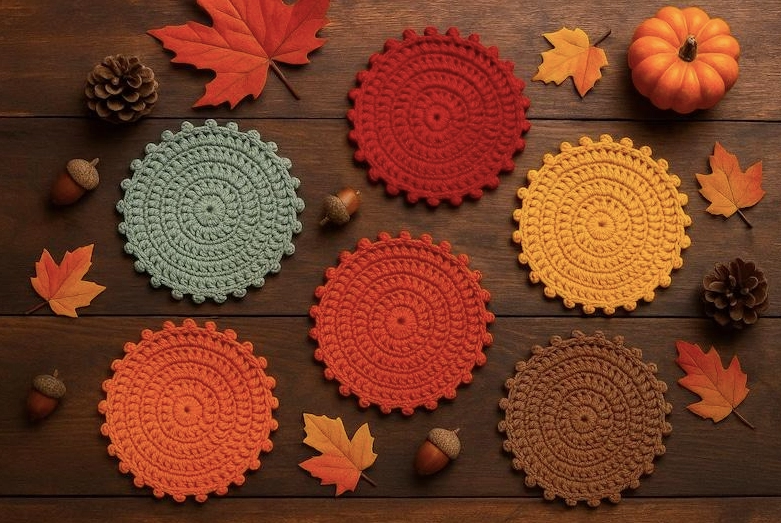
Before sewing the appliqués, arrange all five leaves around the coaster.
Try the following colour order:
- Pumpkin orange
- Mustard yellow
- Rust red
- Caramel brown
- Burgundy
Space them evenly around the outer section of the cream circle.
You can position the leaves with their pointed ends facing outward or alternate their direction for a more natural appearance.
Use small stitch markers or pins to hold the leaves in place while you check the spacing.
Part 5: Sew the Leaves Securely
Thread the yarn tail from each leaf onto your tapestry needle.
Use small sewing stitches around the centre and sides of each appliqué.
Avoid sewing only through the very edge of the leaf. Catch several stitches in the leaf and the coaster base so that the appliqué stays in place.
Repeat for all five leaves.
When all the leaves are attached, weave in the remaining ends on the back of the coaster.
Part 6: Finishing the Outer Edge
For a neat finish, you can add an optional single crochet border.
Attach cream yarn to any stitch along the outer edge.
- Ch 1.
- Sc in each stitch around.
- Sl st into the first sc to join.
- FO and weave in the end.
Keep the border relaxed. If you crochet it too tightly, the coaster may curl upward.
Your maple-inspired crochet coaster is now complete!
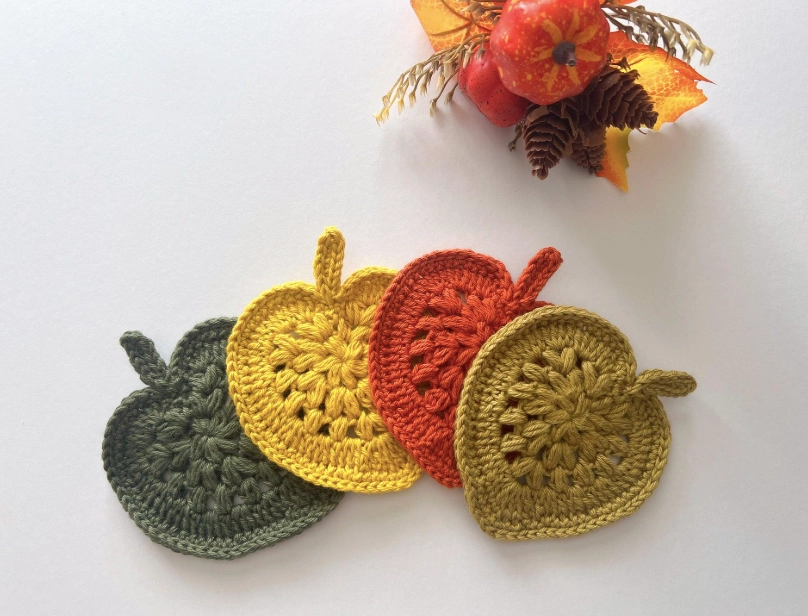
Maple Leaf Crochet Coaster Colour Variations
One of the best things about this pattern is how easily you can change the colours to match your home décor.
You don’t have to use traditional autumn shades. Try different combinations to create a collection of coasters for different occasions.
1. Traditional Autumn Colours
Combine pumpkin orange, mustard yellow, caramel, rust, and burgundy.
This is the classic fall combination and works beautifully for Thanksgiving table decorations.
2. Rustic Woodland Colours
Choose olive green, dark brown, burnt orange, and muted mustard.
These colours complement wooden furniture, natural table runners, and rustic home accessories.
3. Neutral Farmhouse Colours
Use cream, beige, taupe, and light caramel.
This combination is perfect if you prefer understated seasonal decorations.
4. Burgundy and Gold
Choose burgundy, deep red, and mustard gold.
This combination creates a richer appearance and looks particularly lovely during late autumn.
5. Soft Pastel Autumn
Try dusty peach, pale yellow, sage green, and ivory.
Pastel colours give the coaster a lighter appearance while keeping the handmade autumn theme.
How to Make a Matching Set of Crochet Maple Leaf Coasters
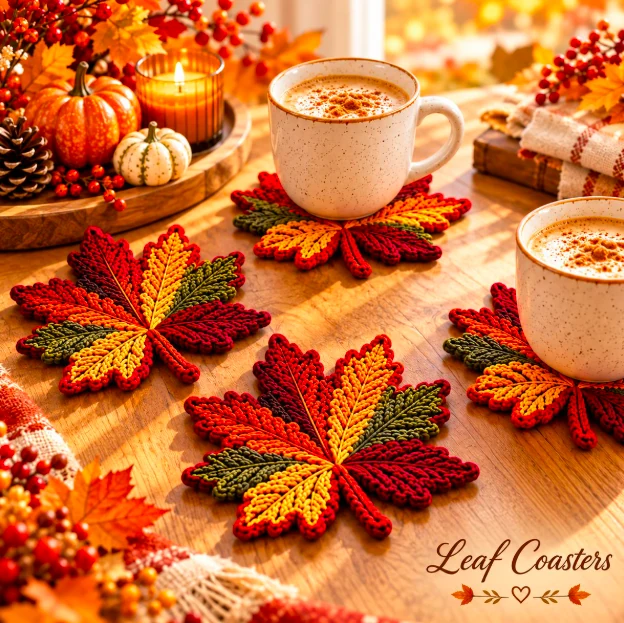
Making one coaster is a lovely start, but a matching set can make an even better handmade gift.
For a set of four:
- Crochet four identical cream coaster bases.
- Use the same hook size for every piece.
- Keep the same number of rounds.
- Repeat the same leaf arrangement.
- Use matching colour combinations.
You can also make each coaster slightly different by changing the order of the autumn leaf colours.
For a coordinated gift set, place the four coasters together and tie them with a piece of natural cotton ribbon.
Add a small handwritten gift tag to make the presentation more personal.
Creative Ways to Use Your Crochet Maple Leaf Coasters
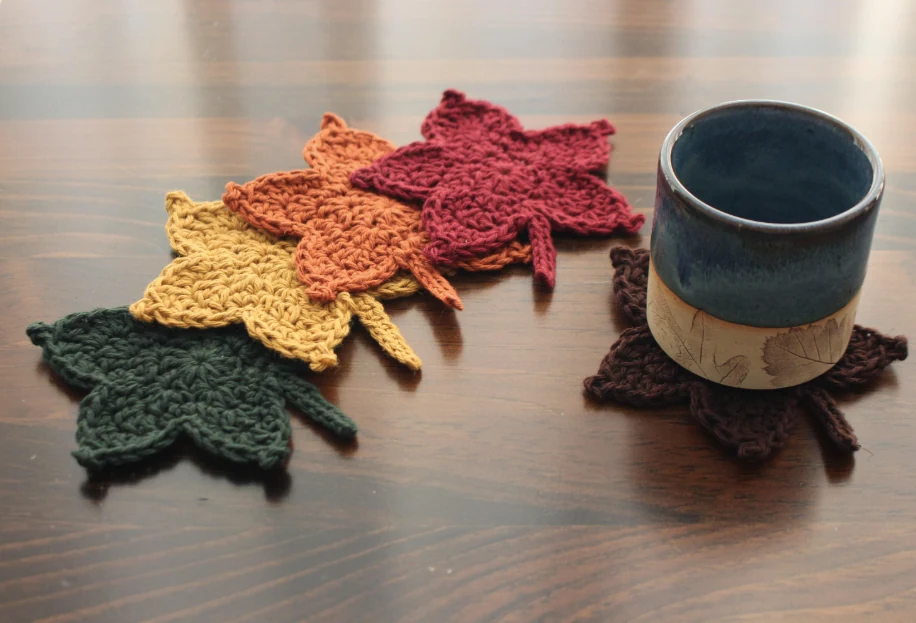
These handmade crochet coasters can be used for more than protecting your table from everyday drink rings.
Coffee Table Decorations
Place a few coasters on your coffee table alongside a small vase, candle, or seasonal decoration.
Their warm colours create a cosy autumn atmosphere.
Thanksgiving Table Settings
Use one coaster at each place setting.
Coordinate the leaf colours with your napkins, table runner, and centrepiece for a consistent seasonal look.
Handmade Housewarming Gifts
A set of four maple leaf coasters makes a thoughtful housewarming gift.
You can package them in a small kraft-paper box with a ribbon.
Autumn Craft Fair Products
These coasters are also suitable for handmade craft collections.
You can offer individual pieces or matching sets in different autumn colour combinations.
Remember to calculate your materials, time, packaging, and selling fees when setting a price.
Seasonal Kitchen Decorations
Display a few coasters on a kitchen counter or breakfast table.
They are a simple way to introduce autumn colours into your everyday space.
Troubleshooting Common Crochet Coaster Problems
Even a simple crochet coaster can sometimes behave differently depending on your yarn, tension, and hook size.
Here are some common problems and practical solutions.
Why Is My Crochet Circle Curling?
If your coaster starts curling upward, your stitches may be too tight or you may have too few increases.
Try the following:
- Check the stitch count at the end of each round.
- Use a slightly larger hook.
- Avoid pulling the yarn too tightly.
- Make sure the increases are distributed evenly.
A flat coaster base is important because it needs to sit comfortably on a table.
Why Are the Edges Wavy?
Wavy edges usually mean the circle has too many stitches for its current size.
Check whether you accidentally added extra increases.
You can also try a smaller hook if your stitches are naturally loose.
Why Do My Leaves Look Uneven?
Make sure you use the same foundation chain and stitch sequence for every leaf.
Keep your tension consistent, especially when working the taller stitches near the pointed end.
You can gently shape the finished appliqués with your fingers before attaching them.
How Can I Make My Coaster More Durable?
Use cotton yarn and weave in all ends securely.
Make sure each leaf is attached with several small stitches rather than only one or two.
For coasters that will be used frequently, choose washable yarn and avoid delicate decorations that can come loose.
Why Does My Coaster Look Smaller Than Expected?
Your tension may be tighter than the suggested gauge.
Try using a slightly larger hook or a thicker cotton yarn.
You can also add another increase round to enlarge the circular base.
Care Instructions for Handmade Crochet Coasters
Cotton crochet coasters are practical, but proper care helps them maintain their appearance.
Washing
Check the yarn manufacturer’s washing instructions first.
If the yarn is machine washable, place the coaster in a small laundry bag and use a gentle cycle.
Handwashing in cool or lukewarm water is another option.
Avoid harsh detergents and bleach, particularly when using several different colours.
Drying
After washing, gently press the coaster between two clean towels to remove excess water.
Lay it flat and reshape the circle.
Allow it to air-dry completely before using or storing it.
Avoid hanging wet coasters because this can stretch their shape.
Storage
Store your coasters in a clean, dry drawer or decorative basket.
Keep them flat rather than folding them.
If you make a complete autumn collection, you can store all four together with a small label identifying the yarn colours and care instructions.
Frequently Asked Questions
1. Is this maple leaf crochet coaster pattern suitable for beginners?
Yes. The main coaster uses basic double crochet stitches and simple increases. The leaf appliqués require a combination of single crochet, half double crochet, double crochet, and slip stitches. Beginners who understand these stitches should be able to follow the instructions.
2. What yarn is best for crochet maple leaf coasters?
Cotton yarn is one of the best choices because it has good stitch definition, absorbs small amounts of moisture, and is available in many autumn colours. A cotton blend can also work well.
3. How big is the finished crochet coaster?
The standard pattern produces an approximately 5–6 inch coaster, depending on yarn thickness, hook size, and tension. Adding another increase round creates a larger version.
4. Can I use acrylic yarn instead of cotton?
Yes, acrylic yarn can be used for decorative coasters. However, cotton is generally a more practical choice for drink coasters because of its absorbency and suitability for frequent washing. Neither should be treated as a heat-resistant trivet.
5. How many leaves should I add to the coaster?
This pattern uses five small decorative leaves. You can add fewer leaves for a simpler design or more for a fuller appearance. Make sure the appliqués are distributed evenly.
6. Can I crochet the leaves in one colour?
Absolutely. You can make all the leaves in orange, mustard, burgundy, or any colour you prefer. A single-colour design creates a coordinated look, while mixed colours give the coaster a more traditional autumn appearance.
7. Why does my crochet coaster curl?
Curling is often caused by tight tension or insufficient increases. Check the stitch count in each round and make sure you are following the increase sequence correctly. Changing to a larger hook may also help.
8. Can I sell finished crochet maple leaf coasters?
Yes, you can sell finished items made using this original pattern. If you publish or share the written instructions, please link to your original article rather than copying and redistributing the complete pattern.
9. How many coasters can I make from one ball of cotton yarn?
It depends on the yarn’s length, weight, and the amount used per coaster. As a practical starting point, weigh the yarn used for your first finished coaster, then divide the remaining yarn weight by that amount to estimate how many more you can make.
10. Can I make this crochet pattern larger?
Yes. Continue adding increase rounds to the circular base. For each additional round, increase the number of stitches between increases by one. You can also make larger leaf appliqués by using thicker yarn and a larger hook.
Final Thoughts: Create Your Own Handmade Autumn Crochet Coasters
A handmade crochet coaster is a small project that can bring plenty of seasonal charm to your home.
This maple leaf-inspired design combines a simple circular base with colourful leaf appliqués, making it a useful project for practising basic crochet techniques while creating something decorative.
You can follow the traditional autumn palette, experiment with neutral colours, or make a complete set of matching coasters for your kitchen or living room.
It is also a lovely way to use leftover cotton yarn and prepare handmade gifts for the autumn season.
If you enjoyed this pattern, save it to your crochet inspiration board and try making a matching set in your favourite fall colours.
Happy crocheting!