11 Easy Crochet Baby Blanket Ideas To Try

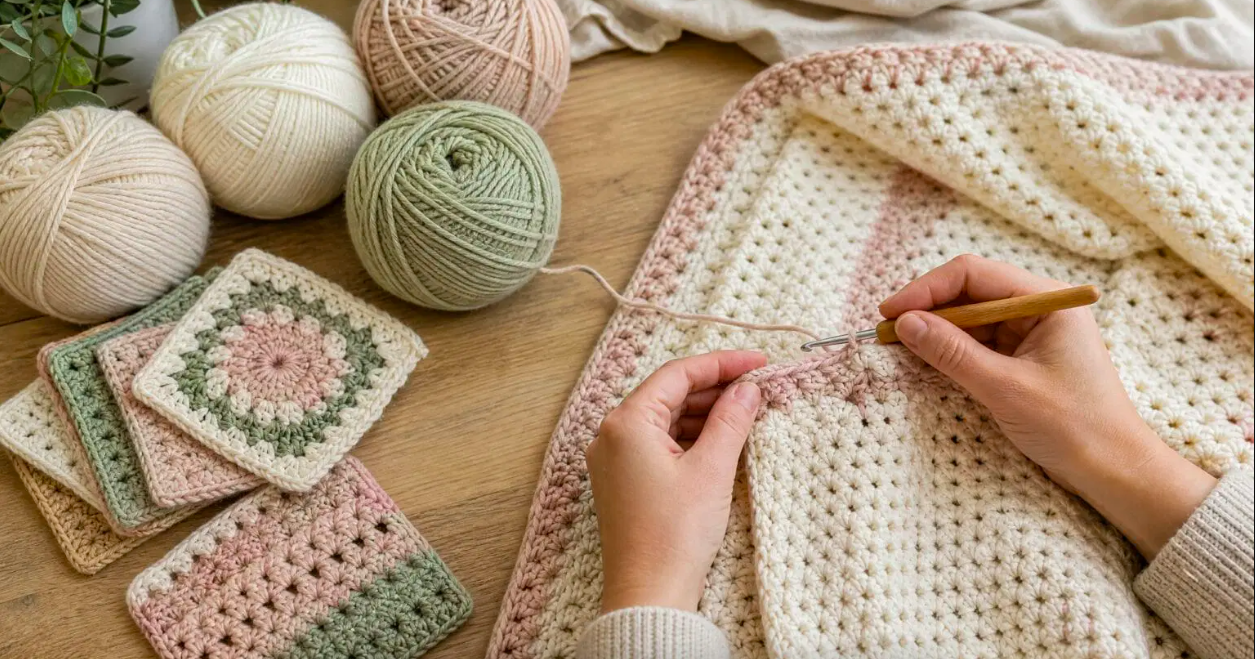
Easy crochet baby blanket ideas include simple stripes, puff stitch texture, shell stitch fans, ripple rows, granny squares, color block chevrons, and rainbow moss stitch. Start with a 36-by-36-inch size and soft, machine-washable cotton, bamboo, or hypoallergenic acrylic yarn. Beginners can use double crochet or half double crochet stitches. Check the size as work continues, and weave in ends securely. Small uneven areas are normal and often improve with gentle blocking. More easy pattern and finishing ideas follow.
Key Takeaways
- Choose a baby blanket size based on use: 36-by-36 inches for general use, 30-by-40 inches for receiving, or larger for growing toddlers.
- Start with beginner-friendly stitches such as double crochet, half double crochet, shells, ripples, or granny squares.
- Try easy designs including puff-stitch stripes, classic shells, ripple rows, joined granny squares, and color-block chevrons.
- Use soft, machine-washable baby-safe yarns like cotton, bamboo, superwash Merino, or hypoallergenic acrylic in DK or worsted weight.
- Finish safely by weaving in all ends, blocking the blanket for even edges, and adding a care tag for gifting.
Before You Start
Baby blankets are one of the most useful crochet projects because they give you plenty of practice with stitch repeats while creating something soft and practical. Before you begin, choose a yarn that feels gentle against the skin and can handle frequent washing. It also helps to decide whether you want a stroller-size blanket, a receiving blanket, or a larger cot blanket so you can adjust your starting chain and overall length with confidence.
Helpful baby blanket guide:
- Yarn choice: Look for soft, washable yarn in baby-friendly fibers such as acrylic, cotton blends, or other easy-care options. Avoid anything scratchy or heavily fuzzy if you want stitch definition.
- Starting chain: Many blanket patterns rely on a stitch multiple. If you want to resize, make a small swatch first so you can confirm how many stitches fit into your preferred width.
- Hook and tension: Use a hook that creates a fabric with a little drape but no large holes. Baby blankets should feel comfortable rather than stiff.
- Color planning: If you are using stripes or multiple shades, lay out your color order before you start so the transitions look balanced across the blanket.
General notes:
- Count stitches at the end of each row to help keep side edges straight.
- Weave in ends securely, especially on projects that will be washed often.
- Finish with a simple border and gently block if needed to smooth the edges.
Cozy Crochet Club
More free patterns to explore later
The patterns in this collection are just below, so keep reading to find your next project. When you’re ready for more ideas, you can also explore our Free Pattern Library and browse by project type or search for something new.
Choose the Right Crochet Baby Blanket Size
Choosing the right crochet baby blanket size begins with deciding how the blanket will be used. A standard baby blanket is often 36 by 36 inches, offering coverage for infants and toddlers.
For swaddling or stroller use, receiving blankets commonly measure 30 by 40 inches. Crib blankets are usually 30 by 36 inches, which fits standard crib spaces well.
Before starting, write down the intended purpose and planned blanket dimensions. Size variations are normal, especially when adjusting a pattern for an older child. A 40 by 50 inch blanket can provide more room as a child grows.
For playtime, a larger size may be helpful, while sleeping or travel may call for a smaller option. If the first measurement seems off, small adjustments are easy. Checking size as work progresses helps create a useful finished blanket. Chunky yarn and basic stitches like single and double crochet can help you complete the project more quickly and achieve a cozy texture chunky yarn.
Pick Soft, Baby-Safe Crochet Blanket Yarn

Soft, machine-washable fibers such as cotton, bamboo, superwash Merino, or hypoallergenic acrylic help keep a baby blanket gentle, practical, and durable.
A small test swatch can confirm that the yarn feels soft against sensitive skin, and yarns with loose textures or embellishments should be avoided for safety.
If the first choice feels rough or sheds, selecting a smoother yarn is a simple adjustment.
Consider choosing lighter yarn weights like DK or worsted for a balance of warmth and stitch definition.
Choose Gentle, Washable Fibers
A baby blanket starts with yarn that feels gentle, washes easily, and holds up to regular use. Check labels before buying, especially the washing instructions, since blankets need frequent cleaning. Cotton and bamboo feel soft against delicate skin, while acrylic offers easy care and dependable wear. Superwash Merino is wool treated for machine washing. Hypoallergenic yarn may help limit irritation for sensitive babies.
| Fiber | Benefits | Care |
|---|---|---|
| Cotton | Soft, breathable | Machine wash |
| Bamboo | Silky, gentle | Follow label |
| Acrylic | Durable, affordable | Machine wash |
A small test swatch helps compare yarn fiber types, texture, and softness before starting. If a yarn feels rough or sheds, choose another option. Small changes are normal, and testing supports steady progress.
Prioritize Safety And Durability
Safe, durable yarn gives a baby blanket the comfort and strength needed for everyday use. Bamboo, cotton, superwash Merino, and quality acrylic are soft choices for delicate skin. Checking labels for safety standards helps confirm that yarn is suitable for infants.
Hypoallergenic yarns can reduce the chance of irritation, especially when a baby has sensitive skin.
Before beginning, making a small swatch allows for durability testing. The swatch can be washed and dried as directed to see whether it stays soft, keeps its shape, or develops rough spots.
Machine-washable yarn is usually the most practical option for frequent cleanup. If the yarn pills, stretches, or feels scratchy after washing, another choice may work better.
Securely weaving in every loose end prevents unraveling and reduces choking hazards. Small adjustments during the project are normal.